Social media – the manipulation machine we need to manage and use with care

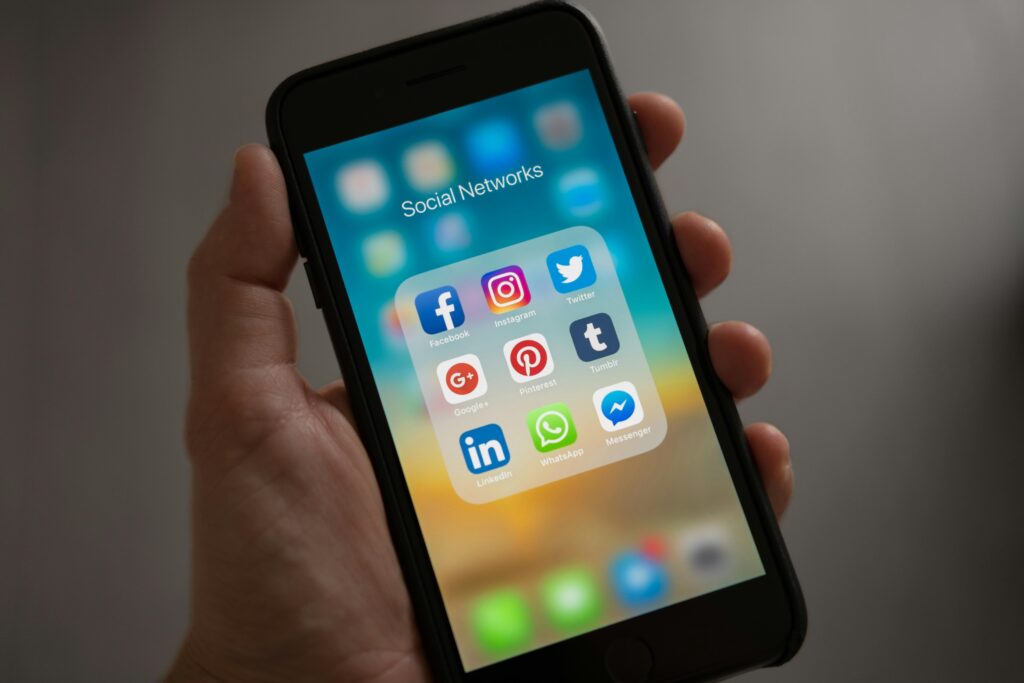
photo credit – Tracy Le Blanc


“It’s wrong to say we’ve grown apart and can’t understand each other. What’s really going on is that we see less than ever before of what others are seeing, so we have less opportunity to understand each other.”  ― Jaron Larnier, The Social Dilemma


Following a three and a half year break from all social media and a lot of musing, feeling and philosophising, I have decided to step back into the online world of the ‘metaverse’.

In this blog I wish to share what I’ve learned from my time being social media-free, and how I intend to re-engage with the world of posts, reels, and algorithms. Because I feel it’s really important to maintain a healthy relationship with these tools, which do serve a purpose but can also be detrimental.

I hope you find this blog useful and, if nothing else, it raises questions within you about your own relationship with social media, empowering you to take control of how you choose to use these tools, as opposed to them manipulating and using you.

I am by no means an expert in this field, but I am a human who loves to connect and empower people, and I remain open to learn and question my own beliefs and opinions. Please do feel free to comment and question my sharings so we can keep the conversation going and grow our awareness together.


Why the break from social media?

“Addiction gradually turns you into a zombie. Zombies don’t have free will.”  ― Jaron Larnier The Social Dilemma


In 2021 I watched the documentary The Social Dilemma, which affected me deeply and raised important questions about social media, its impact on the world and my own relationship to it.

I think I have always felt some discomfort around social media, and this film made that abstract discomfort more concrete in the form of real life accounts from the creators of Facebook and Google amongst others.

It provided facts and statistics of the negative impact it can have on both the individual and society. This time of questioning led me to the book Ten arguments for deleting your social media accounts right now by Jaron Lanier, a computer scientist and philosopher featured in The Social Dilemma.

Both resources made clear the manipulative, behaviour-altering power of social media, and its dangerous potential to polarise people. It’s also highly addictive and can contribute to poor mental health, particularly that of adolescents’ whose young brains are still developing.

On this basis, I decided to deactivate my social media accounts for a year, the intention being to create some space in which to reflect on their pros and cons, which definitely came with some risks. As a self-employed massage therapist, Tai Chi teacher and event facilitator, social media was integral to how I promoted and marketed my work. But all things considered I felt it was a risk I had to take.


Over three years later… 

The intention to go for a year without social media turned into three and a half, and I can honestly say it was glorious!

On a personal level, I noticed I was able to be more present in the moment, that my relationship with my phone was a lot healthier, meaning I was enjoying longer periods of time without checking it or feeling the need to open apps.

The way I experienced beautiful moments like precious time with friends became even more special as there was no intention to record, share and use these moments as posts – liberating!

From a business perspective it was interesting. The break from social media coincided with a break from Tai Chi teaching, so there’s nothing to report on that front. But I was surprised to find my massage practices busier than they’d ever been before. I was fully booked in Amsterdam and Utrecht, which validated my decision. All that said, I did ultimately make the decision to return.


If time away from social media was so nourishing,  why consider going back?

For the last few years I’ve been developing Embodied Empowerment, a platform I co-founded with Villia de Koningh, a place for practitioners who hold space for others to come together to be supported, inspired and connected.

Our motto is Strength in Community, and I’m committed to making our emerging community as strong and collaborative as it can be. I’ve also started working with Welkom Utrecht, an organisation supporting refugees and asylum seekers.

As much as an absence of social media has brought me many rewards, now that I’m embarking/ continuing to build on a number of new ventures, I do wish I could more readily share and support the growth of these and other projects. The ultimate goal being to create a self-supportive global community, which can, in turn, help the wider community of the world.

More and more I have found myself asking the question, Is it possible to use social media and keep my integrity? Because I still have strong beliefs about the dangers of these tools.


Strength in flexibility

When I make a decision I can be steadfast, even rigid, inflexible in my capacity to go a different way, but if Tai Chi has taught me anything, it’s that true strength lies in the capacity to be flexible and adapt. If we can keep our form and structure (integrity) we can bend and flex in many different ways and allow things to flow with greater ease and purpose.

I was holding firm to my new identity as a person who doesn’t use social media, who had drawn a line around something she felt was Bad and had no uses at all. But nothing is ever completely black or white. Most things exist within the grey. And the answers we arrive at at one time in our lives doesn’t mean we should then stop asking questions.

Now, the question I’m asking myself is, How do I reactivate my accounts and engage with the world of algorithms in a positive, mindful way?


A Social Media Manifesto 

To be clear with myself about my intentions when using social media, I developed my own Social Media Manifesto, an evolving document to keep me grounded in the things I have learned from my years of being social media-free.

It acts as an anchor and important reminder of why I stopped using social media in the first place, but also of the genuine potential for connection. Most importantly of all it’s there to remind me that I do have control over if/ how/ when I choose to use it, which is something all too easy to forget.

There’s only so much we can do in the face of a multi-billion goliath of an industry, the purpose of which is to grab and keep as much of our attention as possible. Perhaps all we can ever really do is make the right decisions for ourselves on how we use it. At the end of the day, we do have the power and we can make it work for us.

You can read my Social Media Manifesto here, and perhaps you’ll feel inspired to write one of your own? I’d love to hear your thoughts about your own social media journeys – please feel free to let me know what you think!

Trusting your gut

Trust Cafe

Image credit: Trust Amsterdam

“At times you have to leave the city of your comfort and go into the wilderness of your intuition. What you’ll discover will be wonderful. What you’ll discover is yourself.”
– Alan Alda

Bristol born and bred

I’m a Bristol girl, born and bred. I’ve travelled, spent a few months in places here and there, but I’ve never actually lived anywhere else.

There are good reasons for that. I love this city, it holds my heart. My life is rich and filled with inspiring, meaningful connections and opportunities for growth. Friends, family, colleagues, clients – there’s an awful lot to be thankful for. But for years now I have found myself wondering what it would be like to live somewhere else, to walk a different path on streets that have never felt my feet.

Amsterdam calling

A couple of years ago a friend and I went on a city break to Amsterdam. During that trip something deep inside me came alive, like a planted seed slowly but surely moving towards the light. I thought to myself, “I could really be here.” I even said it out loud to my friend. That day wheels were set in motion that have carried me all the way to where I am now, which is moving to Amsterdam in less than three weeks time.

Earlier this week someone asked me what I really wanted out of life. I said that I would like to know, fundamentally, that I don’t need things to be a certain way to be OK. I’d like to feel that everything I could possibly need is within me already.

I now see, more clearly than ever, that this is what moving to Amsterdam is all about. I am removing all certainty, all knowns, taking a leap of faith and trusting my gut. And you know what? I’m not even there yet and the benefits of that trust are already showing themselves in the most wonderful ways. It’s incredible how much power can come from trusting the intuition of your body.

Walking a new path

Every time I visit Amsterdam I’m struck by the power of walking a new path, of stepping towards something that you absolutely can not see or predict but is nonetheless there. Walking down streets that I don’t yet fully know I am somehow fuller and more knowing than I have ever been. There is no other sound than the soft rhythm of my feet falling gently upon my own, chosen path.

This is a bodily feeling. The intuition of the soul, not the logic of the mind. I didn’t think moving to Amsterdam was right, I felt it was. Something in the centre of my body recognised the space and said, “This is where you need to be.” I trusted my gut. Such power lives there.

Body talk

Of course trusting your gut doesn’t have to mean moving your entire life to another city. Our bodies talk to us all the time and can sometimes help us to access where we’re really at more readily than the mind. Not to say that our minds aren’t powerful or important, of course not, but in a society where we’re often encouraged to work things out with our minds alone, to first and foremost “use our heads” and “figure things out”, the innate intelligence of the body can end up taking a back seat.

When that happens it can mean we are not as alive to certain signs as we could be. We may not be able to access how we really feel in a given situation, guided instead by the thoughts in our mind or perhaps things we think we should feel.

Noticing

One of the best ways we can nurture our connection with our bodies is to begin to notice what’s there. Maybe there’s a flutter in the heart, a movement in the stomach, a pull towards something or even a resistance.

Allowing these sensations room to manoeuvre isn’t always easy. In fact it’s downright uncomfortable at times. But when we do allow these feelings some space, when we acknowledge and sit with them, we can loosen our grip on needing to understand or analyse why things are the way they are and, instead, simply allow them to be as they are in that moment. We can sit with ourselves and our bodily sensations with a sense of peace and acceptance, a feeling that nothing needs to change and everything is as it should be

Stay in touch

I will be back in Bristol from time to time and available for treatments. Please get in touch for more details or to book yourself a massage.

And if you want to come and see me in Amsterdam you’ll find me at Dr Feelgood, where I’ll be further developing my massage practice and starting a new chapter in my career. Or pop in and see me at Trust, an exciting movement and collective that I’ll also be working with.

You won’t hear from me here for a little while. I need some time to find my feet and see where this new path takes me, so this will be my last blog post for the foreseeable future. In the meantime, look after yourselves and your bodies and thank you, as ever, for reading.

With love and trust,
Sophie. X

Staying balanced on your bike

amsterdam-bike-and-canal

On yer bike!

I love getting around by bike. It allows me to experience the elements and a greater connection with my body and, if done mindfully, it’s a great way to stay in the here and now.

I’m moving to Amsterdam, another city of cyclists, in June and as I ride around Bristol, more and more I find myself imagining what it will be like to do the same in Holland. It’s like my bike has become a bridge to the future. As I approach the biggest milestone of my life to date, where almost everything is unknown, riding my bike gives me at least one strong, physical sense of what it will actually be like to be there.

Altered alignment

Riding my bike also makes me think about alignment, about what we put our bodies through when we cycle, especially since I had my old bike stolen a few months ago. I was kindly loaned a replacement but I’m used to upright, Dutch-style handlebars (I’m going to fit right in!) and the ones on this temporary bike were much lower.

Cycling it got me all out of whack. I experienced pain in my hips and lower back, I just didn’t feel comfortable at all, which begs the question, how many people are cycling round on bikes that don’t fit them and simply living with the discomfort? Like women in the wrong sized bra, I’m guessing quite a few.

Hints and tips

Body / bike alignment isn’t really my forte, you’ll have to go to experts for that, but I am a Holistic Massage Therapist with expert knowledge of muscles and what they do, so here are a few handy hints to help you cycle more comfortably.

  • Play around with the height and angle of your saddle. How does your lower back feel? Squashed? Could it be more open? Even the slightest tilt forward or back can have a huge impact on your back. It’s worth taking some time to explore.
  • What happens when you peddle? If you don’t extend your legs enough your deep hip flexors will work overtime and become short and tense, which can have a knock on effect on the rest of your body.
  • What is your intention? We have a tendency to focus our intention on the downward motion of cycling, which uses our quadriceps (front thigh muscles). If the muscles at the front of your body are doing all the work it can cause an imbalance and put a strain on your knees and hips. Perhaps you could try bringing more awareness to the upward motion, which gets the hamstrings (back of the thighs) involved. Balance and proportion are always good to aim for.
  • What are your arms doing? Are they locked and holding on tight? Perhaps you could think about introducing a soft bend in the elbow to protect your joints.
  • Why not embrace the opportunity for a quick stretch? When you lock your bike up perhaps you could spend a few minutes stretching your quads – bringing your heel to your bum – and your hamstrings – reaching towards your toes.
  • Are you engaging your core and abdominal muscles or are your legs working overtime?
  • Open your chest. Like driving a car and working at a desk, cycling asks us to bring our arms and shoulders forward and down. Whenever you can, think about doing the opposite, rolling your arms and shoulders back in big wide circles for example. We need to remind our pectoral muscles (front of the chest) that they can be open and long. This can help to alleviate discomfort in the upper back and shoulders.

    Everyone’s different and these are just suggestions. Why not play around and see what works for you?

On the couch

My intention on the couch is to help achieve balance between groups of countering muscles. If one set of muscles is overworked it can put a strain on your entire skeletal structure.

During our massage treatment we can remind short, overworked muscles that they can and be long and those that have clocked off to switch on and get to work when we need them.

We can also develop an after care plan, a series of helpful stretches and exercises tailored to you and the needs of your body.

Book now

I’m doing some extra sessions over the next six weeks to help fit people in before I jet off to Amsterdam. Now is a great time to book.

And I’ll be back every couple of months for teaching weekends at BCMB – there’ll be plenty of opportunities to treat yourself to some you time.

I’ll update my availability on Facebook and over email but feel free to get in touch any time.

And, breathe

Image credit: Chris Stein

Image credit: Chris Stein

The power of the breath

A recent experience with a client got me thinking about the power of the breath. This person has Multiple Sclerosis (MS), a condition which affects the central nervous system, and during a recent relapse had been experiencing cramping (or ‘banding’ as it is known) across her abdomen. This caused severe discomfort for hours, sometimes days, on end.

During our session she explained that although the relapse had subsided she was left with a lingering feeling of disconnection from that part of her body. Emotionally, it had become an area over which she had felt she had no control, no sense of ownership.

There was a sadness around the whole thing, as though a part of her had been taken away. The banding may have gone but the echo of the experience still ricocheted around her muscles and emotional memory.

Reclaiming the body

Together we explored reclaiming her body through the breath, inviting gentle exploration and curiosity by getting her to ‘breathe into’ those areas of disconnection.

Using the breath as a tool we were able to shift things along and create more openness. We were able to continue paving the way towards greater acceptance and allowing all things, past and present, to be as they are.

There was a sense of reclamation to the whole thing. Her body became hers again, something to celebrate and appreciate rather than fear and resent. And it all started with a few simple breaths. Isn’t that amazing?

Noticing the breath

Most of the time we in and exhale without a second thought (we might be in a bit of trouble if we had to remember to do it) but bringing some awareness to the breath can have an incredible impact on your wellbeing.

Noticing your breath can help you to feel more connected with yourself and everything around you. It can allow you to feel more grounded and calmer as you go about your business. It can help to root you in the here and now, to focus on what is happening this very second rather than looking back at the past or ahead to the future.

Focussing on the here and now gives you greater access to that true voice inside, the one which tells you how you really are and what you really want in the moment.

This allows you to make more enlightened choices for yourself, conscious choices informed by an inner calm and peace rather than the unconscious autopilot which governs so much of our lives. And all you have to do to get there is breathe.

Ways to bring more awareness

Have you ever noticed how your breath changes when you’re stressed? Perhaps it becomes shallow. You might even find yourself holding on to it, almost forgetting to breathe.

In situations where we feel worried or unsure of ourselves for whatever reason, our breath tends to take note and follow suit. It’s like a gauge for what’s going on inside, an internal barometer that you can tune in to at any point.

There are lots of ways to bring more awareness to your breath. It’s amazing what can happen when you begin to take notice.

Witness

One of the easiest ways to take notice is to do just that, notice. Where do you feel your breath the most? Is it in the rise and fall of your shoulders? The expansion of your chest? Whatever happens when you breathe, allow yourself to pay attention. What do you witness?

Visualise

Visualisation can be a powerful way to pay attention. Close your eyes and breathe normally. Imagine your breath as a gold light which softens and nourishes the body as you inhale and relaxes and calms the body as you exhale.

Perhaps the light gets bigger and brighter as you breath in and smaller and duller as you breathe out. Perhaps your breath becomes a wave rolling in and out of the shore. Invite yourself to explore and play with whatever feels right for you.

Touch

Your entire body is affected by your breath. Place your hands on your abdomen, your chest or even your neck or shoulders and notice what happens as you breathe. Are there any surprises? Anything you didn’t expect? Get curious with your body, find out what happens when you breathe.

Sit or stand tall

The way you hold yourself every day has a significant impact on the way you breathe. Think about a time when you felt low or a bit unsure of yourself. What effect did those feelings have on your posture? How do you think that posture affected your breath?

Be kind to yourself

Remember, these are just suggestions. There are no right or wrong ways to breathe. Your breath belongs to you and you can use it any way you want, any time you want. You always have total control over your own wellbeing.

On the couch

Holistic massage is a great way to explore the breath. As well as providing a safe, nurturing space in which you can simply be as you are and leave everything else at the door, a professional massage can also create space within your body.

Typically when we think of the muscles involved in breathing we think of the more obvious ones like the diaphragm or the intercostal muscles. But the reality is that your entire body is affected by your breath. Your hips, your lower back muscles, the muscles in your neck and shoulders. All the pieces matter, they all have a part to play.

If a client comes to me looking to work with their breath (perhaps they are stressed and feel like they can’t get enough air in their lungs) as well as thinking about the ‘big players’ I might consider working on, for example, their neck.

Massaging some of these less obvious areas, which work just as hard for you when you breathe, can free up tension, lengthen muscle fibres and encourage both the body and the mind to let go of old ways of being.

Yours for the taking

The best thing about the breath is that it’s yours to do whatever you want with. You have total control over when, how and if you choose to use it. It’s like an in-built, wellbeing tool kit you can access wherever, whenever you want to. Pretty cool huh?

But if you want to take things a step further and allow yourself a space in which you can feel supported in your exploration then I’m always here. A holistic massage with me is a partnership, something we do together. I would love to hear your story and work with you on a treatment plan. Feel free to get in touch for more information.

Let’s get curious

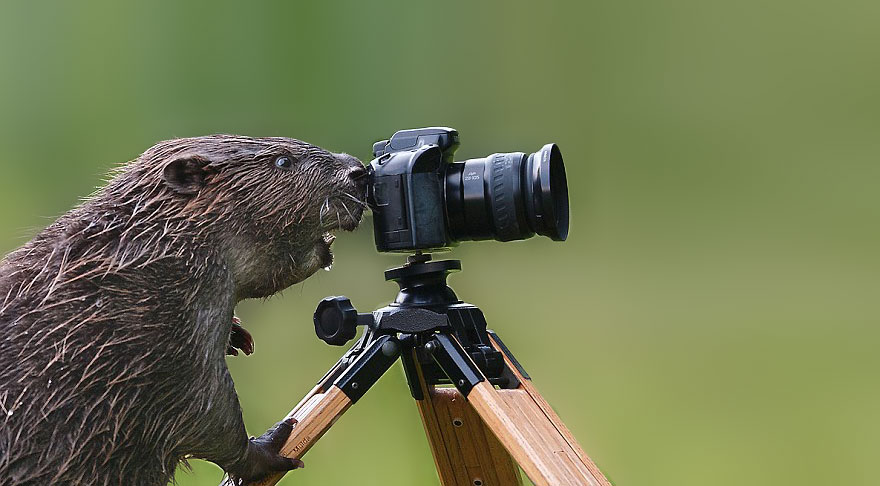
We could all take a leaf out of this curious beaver's book. Image credit: Leopold Kanzler

We could all take a leaf out of this curious beaver’s book. Image credit: Leopold Kanzler

Tuning in

When you see the word ‘pain’ what springs to mind? Bad memories? Negative associations? Something you’d rather be rid of straight away?

What if we turned that response on its head and instead greeted pain with gratitude and curiosity? What might that bring?

Changing our perspective and relationship with pain can allow us to be happier, healthier and more comfortable in our bodies and minds.

Pain is an in-inbuilt protection system, our body’s way of letting us know that something’s not quite right. When we become aware of pain, or more able to tune into it, it presents us with an opportunity to listen, learn, adapt and change.

Adaptation and change can be as simple as taking a fresh look at your work station. Do you need to change your desk around? Are you looking straight ahead or slouching? Perhaps you could invest in a physio ball to keep your core moving and support your lower back while you work?

Pushing pain away

Our busy lives and minds often override this ability to tune in. Things like deadlines, entrenched habits or even workplace cultures can result in us ignoring our pain, maybe by taking painkillers or otherwise pushing it away into the background of our lives.

We can become so accustomed to pain that we carry it for years and stop listening to what it’s trying to tell us. This is a missed opportunity.

When we bring an awareness to bodily discomfort and allow ourselves to experience and understand rather than block and push away those sensations, we empower ourselves to take more control over our minds, our bodies and therefore our lives. This in turn makes it easier to let challenging things come and go without stress.

The same can be said of emotional pain, which is just as difficult to deal with and just as important to acknowledge.

In fact, emotional can pain can be even more difficult to manage than physical pain because of the distinction our society makes between the two (although things have improved, taking six weeks off work with a broken leg is still more socially acceptable than taking a month off for depression).

By practising being with physical pain we strengthen our ability to be with emotional pain, and that can only be a good thing.

On the couch

Pain also signposts areas of the body which are asking for attention. As a Holistic Massage Therapist I’m trained to take note of these signposts. Knots – caused by the waste products of our hard-working muscles – are probably the most common example.

Knots build up in muscle fibres and clog the communication channels which run between the body and the brain via the nervous system. They can lead to feelings of numbness and general disconnection.

Working on these areas can be painful but if the body welcomes it it’s more of a ‘good pain’, a sensation of release. ‘Bad pain’ makes the muscles tense up and says, Please don’t go there.

‘Good pain’ can be a sign that an area is crying out for nurturing touch. By working slowly and always checking in with my clients, I can make that distinction and they can have total control over which pains to investigate and which to avoid.

The power of acceptance

There is also an emotional freedom which comes from paying closer attention to pain.

When we fear or resent pain we run the risk of creating a space inside us which is bigger than the pain itself. These negative feelings can make us hold on to and feel victim to our pain.

On the other hand, practising things like mindfulness can help us to become more aware of the pain in our bodies, to witness it, acknowledge it and ultimately let it pass.

When we do this we see that pain, like all bodily sensations, moves, shifts and ultimately drifts away with time, like clouds rolling across an ever-changing sky.

Let’s get curious

Approaching pain with curiosity and compassion can reap significant rewards. When you wake up in the morning ask yourself, What does my body want today? Regardless of my normal routine, what’s the best thing for me right now, in this moment? You may be surprised by the result.

If you’d like to explore your aches and pains through holistic massage then please feel free to get in touch. Let’s get curious together and see what we can find.